Have a project you’d like to collaborate on? Get in touch at dan@dan-marston.co.uk
© Dan Marston 2024
As the one of the first senior members of the design team at iTech, I helped establish new processes, hire exceptional designers and leaders, and build a strong culture of remote collaboration under the strains of the pandemic.
Leading the design teams across poker products, I set the design vision, mission and strategy that lead to the transformation of the worlds number 1 poker community, and the modernisation of a very popular free-to-play poker app.
Alongside this I worked hard to improve the design chapter across the entire company, contributing to initiatives from a core design system and shared asset library to critique sessions and monthly newsletters.
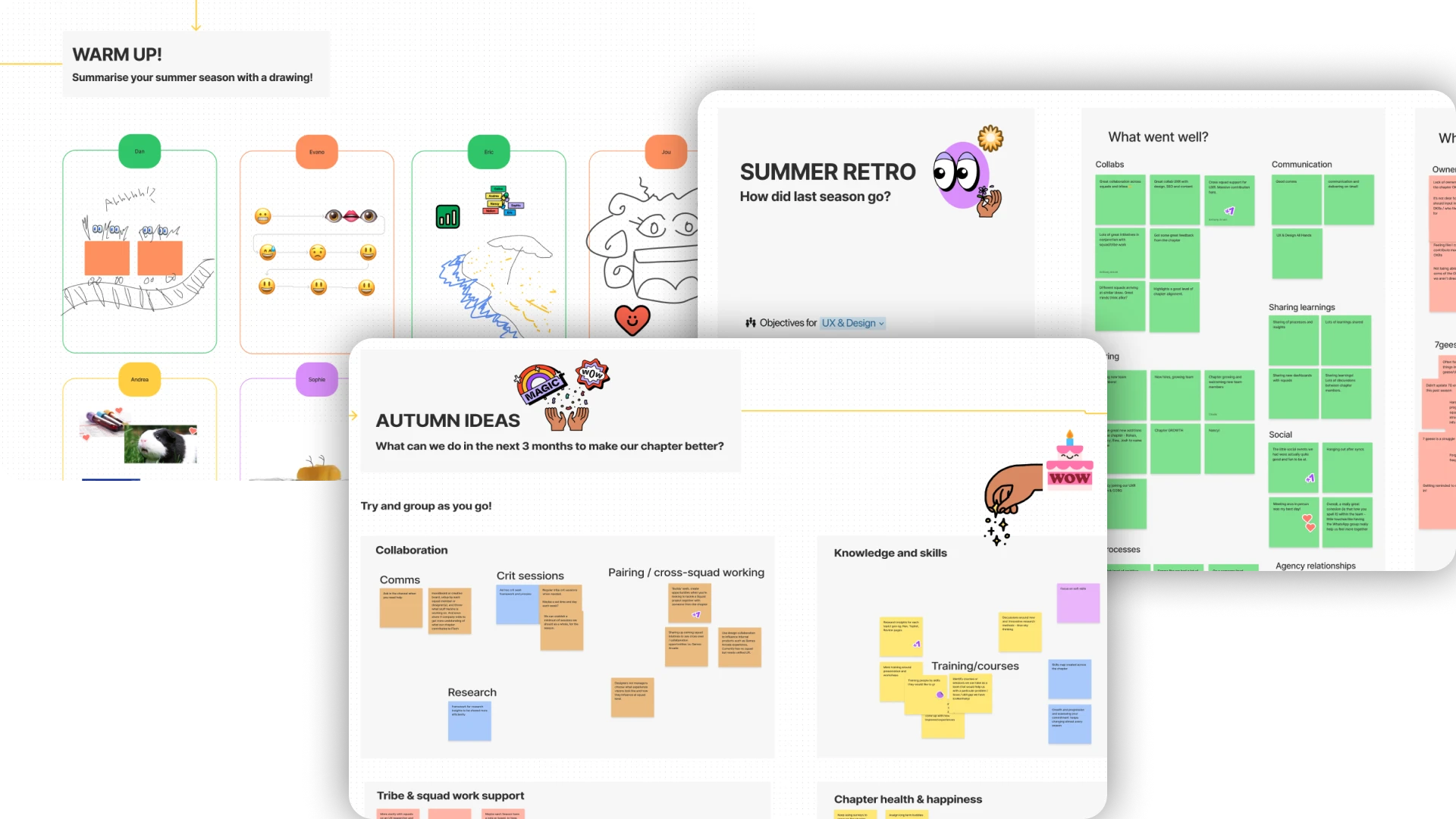
Using OKRs had always been painful for the design team, feeling like they were just being told what to do rather than contributing to design led goals. I wanted to run a process that would give the designers more control over their work and inject some collaboration and fun.
I ran several remote collaborative workshops to gather the team and work through areas we wanted to improve, setting OKRs they could really own and feel good about. This process set a standard for interactive, engaging sessions, leading to improvements in our internal satisfaction metrics.
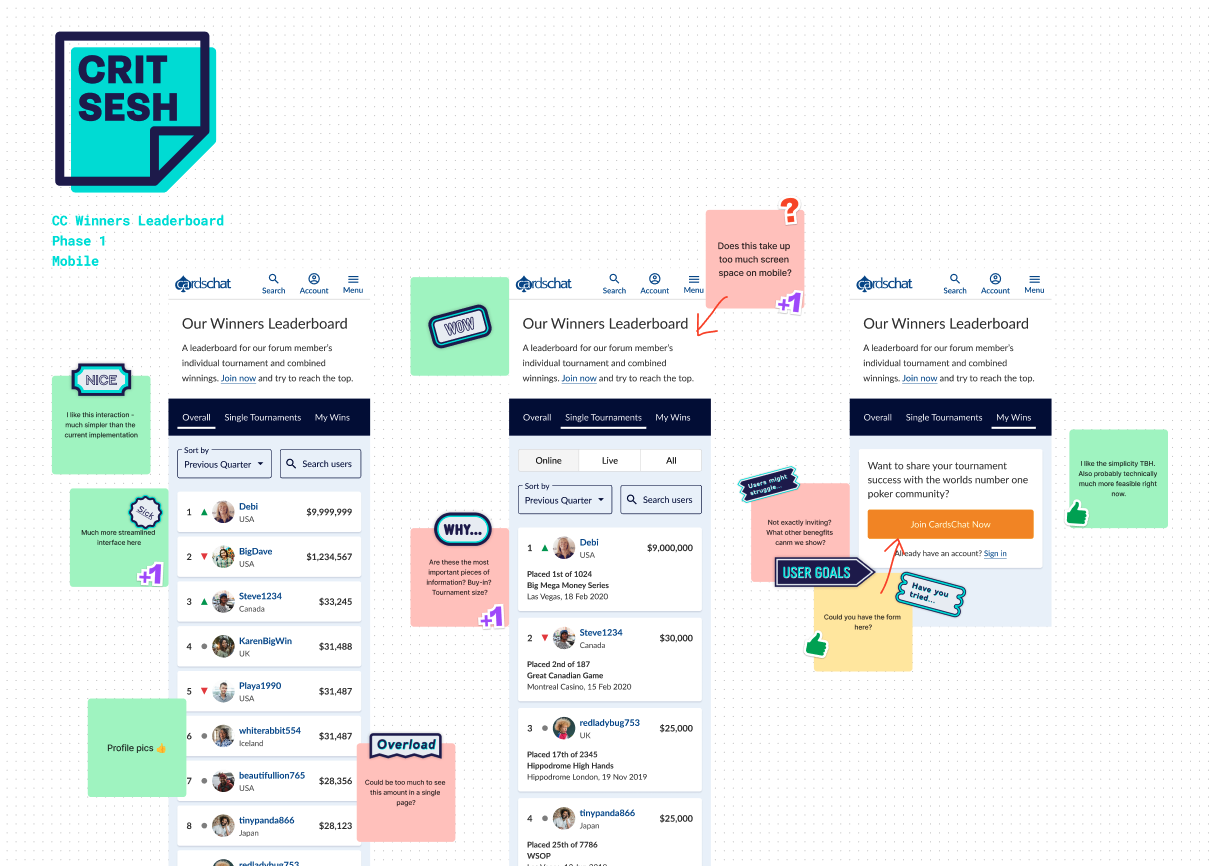
One of the key processes I helped establish was a regular chapter critique session. Designers were quite siloed, working within cross-functional squads day to day, but rarely having a chance to engage with other members of the design chapter to review their work. This was called out in a seasonal review session as something the team would like to do more of.

Working with another designer, we outlined a core process, guidance for hosts and participants, and set the cadence. I also created a simple brand and some sticker assets we could use in Miro and Figjam to give the session a bespoke feel.
These session really opened to door to chapter collaboration, receiving great feedback from the team, paving the way for design jams, research round tables and design pairing sessions.
As part of the hiring management team I helped define new candidate review and interview processes as the company rapidly grew. I created an onboarding plan, which could be easily personalised for new starters, enabling them to get up to speed with the complex set up of iTech & Legend and their particular product.
I also mentored other chapter members in interview technique, having them shadow me and then reverse shadowing them through many interviews. This enabled the majority of the design team to be involved in the hiring process, improving the candidate experience and reducing our time to offer.
Providing mentorship throughout my time at iTech to my direct reports and others in the chapter was very important to me. I was keen to share my knowledge with the team, and also learn everything I could from others to improve myself.
I always made time for 1:1s (the most important meeting in the calendar) to provide support, give feedback and understand the issues or blockers being faced. I also always encourage feedback about my own style and approach; gathering this insight is absolutely critical in improving as a leader and building strong bonds between a team.


Dan’s mentorship was pivotal for me personally in my growth as a designer. I always felt supported and encouraged by Dan, and I learned a lot from him in our time working together.
As a design practitioner I want to lead by example, showing the team a way to do things that they can adopt, but also provide a baseline for them to improve upon. For CardsChat and Replay I led workshops and introduced collaborative processes, and would gather feedback from the team to iterate and improve. I want my teams to feel confident taking the lead from me, planning and facilitating sessions and proactively collaborating with other senior members where needed.
To bolster collaboration across CardsChat and Replay, I set up regular cross-functional meetings and used tools such as Loom, Figjam and Miro to share work with others asynchronously. Regular syncs with other functions, such as marketing, product and engineering enabled us to prioritise multiple work streams. I ensured this was open to view in a simple Notion board so the wider team had visibility of our workload. This strategy significantly improved our workflows and outcomes, building strong relationships between teams, and helped the designers manage multiple requests.


Dan’s understanding of the business and what makes a good design team helped optimise our task management and workflow, making it easier for us to focus on what was needed.
Have a project you’d like to collaborate on? Get in touch at dan@dan-marston.co.uk